Bangkok
Bangkok Temples: Dress Code, Actual Prices, and Which Ones Are Free
One morning is enough for the three older kids, if they go in the right order and arrive when it opens. Then there’s the dress code, which allows for no exceptions.
Verified on from the official websites of Wat Pho and the Grand Palace. This page is updated whenever the rules change.
You'll find lists of Bangkok's most beautiful temples everywhere. What's missing from all of them, however, are the four things that really determine how your morning goes:the dress code required at the entrance, how much each site costs,which ones are free, and the best order to visit them so you don't have to retrace your steps.
In a nutshell: shoulders and knees must be covered, without exception; there are three major paid sites along the river, dozens of free neighborhood temples,and a single morning is enough if you start when they open.
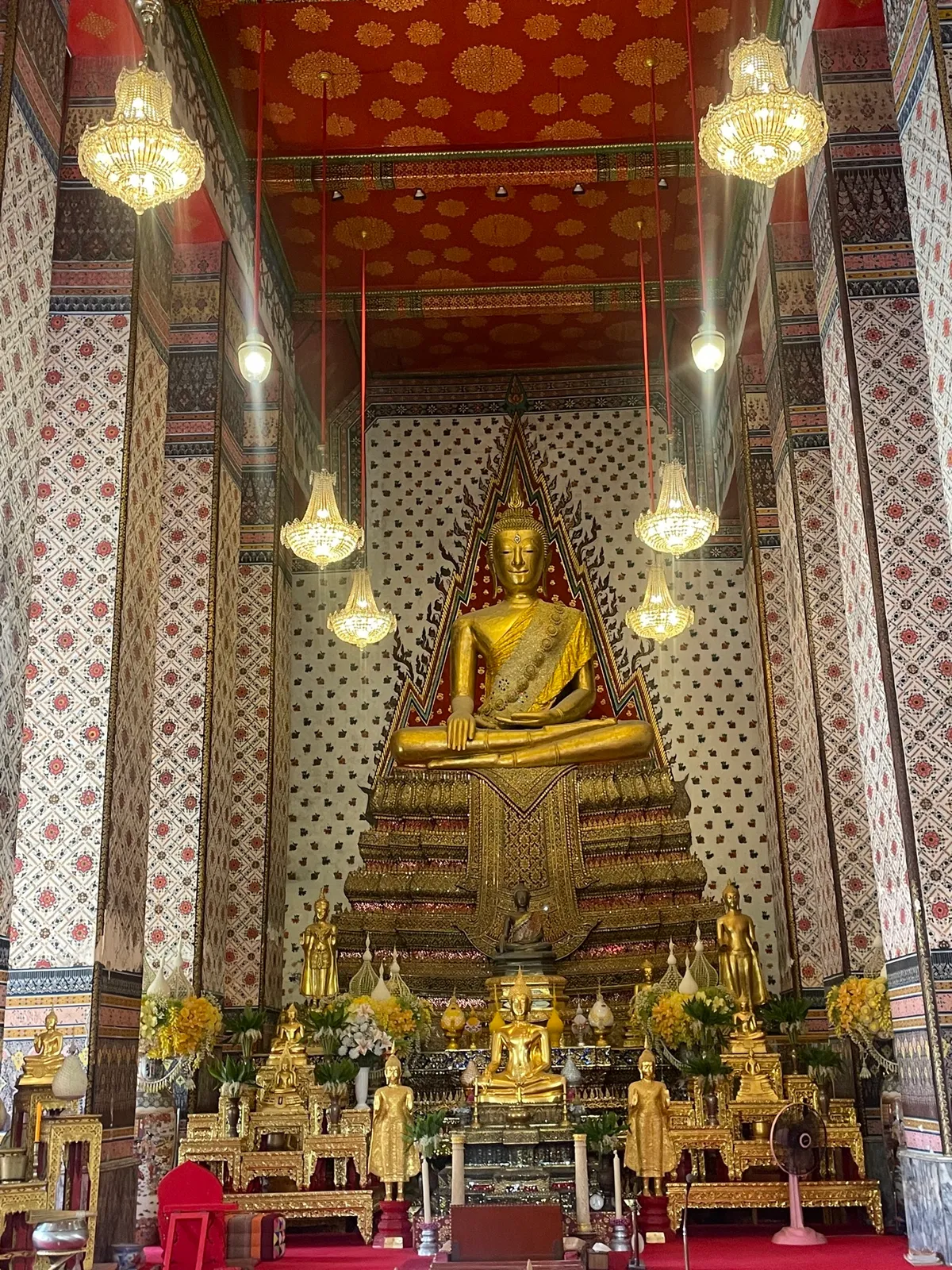 Seen on site
Appearance—the only valid reason for denying entry
Shoulders and knees must be covered. This applies to both women and men, and it’s not just a courtesy—it’s a requirement for entry. Tank tops, shorts above the knee, and sleeveless dresses are not permitted at major attractions.
The Grand Palais has the strictest policy and enforces the rule without exception. You can rent clothes on site, but the line for that adds to the line at the ticket office—all under the sun. Packing a pair of lightweight pants and a long-sleeved T-shirt in your bag takes care of it for the whole morning.
You should take off your shoes before entering buildings, but never in the courtyards. Sandals that are easy to take off are better than lace-up shoes when you're going from one room to another.
The Big Three, and How Much They Cost
Prices as of August 2026, given as approximate figures: they are updated regularly, and the official websites of the two main providers are listed in the sources.
| Website | What You'll See There | Home | Duration |
|---|---|---|---|
| Grand Palace and Wat Phra Kaew | the Temple of the Emerald Buddha, the former royal residence | about 500 baht | 1 hour 30 minutes |
| Wat Pho | the 46-meter-long Reclining Buddha, the traditional massage school | about 200 to 300 baht | 1 h |
| Wat Arun | the Temple of the Dawn and its porcelain spire, on the opposite bank | about 100 to 200 baht | 45 min |
The ones that cost nothing
This is the part that ticket sellers don't highlight—and for good reason.The vast majority of temples in Bangkok are free to visit.
Wat Saket, the Temple of the Golden Mountain, is reached by climbing a spiral staircase that leads to a 360-degree view of the city. A small fee is charged for access to the top; there is no charge for the rest of the site.
Wat Traimit, in Chinatown, houses a massive golden Buddha weighing several metric tons, which was long covered in stucco to conceal it. There is an admission fee to enter the main building, but there is no charge to visit the site.
And all the neighborhood temples, where you can walk right in and run into people who are there to pray rather than take pictures. That’s often where the visit really comes alive—and it doesn’t cost a thing.
A Morning That Works
| Time | Where | Why in that order? |
|---|---|---|
| 8:30 a.m. | Grand Palais, at the opening | the busiest and least shaded—best to visit before the crowds and the heat |
| 10:30 a.m. | Wat Pho, a ten-minute walk away | immediate neighbor; largely covered, so bearable by late morning |
| 12 h | Wat Arun, by boat from the pier | The ferry ride costs a few baht, and you can take it without making a reservation |
The best way to get there is by boat, not by taxi: the temple district is poorly served by the elevated train and is congested with cars. The Chao Phraya shuttle boats run up the river all day long. Details are on the "Getting AroundBangkok" page ( coming soon).
Two things to know before you go
“The temple is closed today” is a lie. People will approach you near major tourist sites to tell you this and offer you an alternative tour by tuk-tuk. It’s the oldest scam in Bangkok, and it always ends up at a gem shop or a tailor’s. The major temples are open every day, and this information is available on their official websites.
These are active places of worship. Do not turn your back on a Buddha statue to take a photo with it, do not point with your foot, and keep your voice down inside. A complete guide to etiquette will be posted on the “Tips andEtiquette” page soon.
In summary
Shoulders and knees must be covered—without exception and for everyone—with the Grand Palace enforcing the strictest dress code. There are three major temples that charge admission—around 500, 200 to 300, and 100 to 200 baht, respectively—and dozens of neighborhood temples that are completely free, including Wat Saket and its view. One morning is enough—visit the Grand Palace first, followed by Wat Pho and then Wat Arun—arriving by river and starting as soon as they open. And if someone tells you a temple is closed today, they’re wrong. The complete city guide is on the “Visit Bangkok” page.
What should you wear when visiting a temple in Bangkok?
Shoulders and knees must be covered for both women and men. Tank tops, short shorts, and sleeveless dresses are not permitted at the entrance to major temples. Shoes must be removed before entering the buildings. The Grand Palace has the strictest rules and strictly enforces them—you may even be required to rent clothing on site.
Which temples in Bangkok are free to visit?
Most neighborhood temples are free to visit, as is Wat Saket—except for a small fee to climb to the top. The three major sites along the river—the Grand Palace, Wat Pho, and Wat Arun—charge an admission fee.
How much does it cost to visit the temples in Bangkok?
As a rough estimate, verified in August 2026: about 500 baht for the Grand Palace, around 200 to 300 baht for Wat Pho, and 100 to 200 baht for Wat Arun. Expect to spend about 100 euros for two people if you include transportation and drinks, and nothing at all for a day spent visiting neighborhood temples.
How long does it take to visit the temples in Bangkok?
One morning is enough to see all three major attractions, starting right when they open. They’re close by, separated only by a short walk and a boat ride across the river. Spending a whole day there is the best way to end up exhausted from the heat.
In what order should I visit the temples in Bangkok?
Start at the Grand Palais right when it opens, when the crowds and the heat are still light, then head to Wat Pho—a ten-minute walk away—and then to Wat Arun by taking a boat across the river. This is the geographical order, and it avoids having to backtrack.
Do you need a guide to visit the temples in Bangkok?
No, the sites are well-marked and can be visited on your own without any trouble. Be wary, however, of people who approach you near a temple to tell you that it’s closed today and offer you another tour: it’s the oldest scam in town, and it always ends up at a shop.