A Month in Thailand Off the Beaten Path: Bangkok, Isan, Laos, and the Islands
Most one-month itineraries in Thailand follow the same loop: Bangkok, the north, the islands, then back. It’s a good trip. But it’s not really a one-month trip—it’s a two-week trip stretched out, with extra days spent traveling.
A month allows for something else. It lets you go where almost no one else goes, to cross a border, and to head back toward the sea without feeling like you’re retracing your steps. Here is the actual route I took, and what I would do differently.
The itinerary at a glance
| Step | Estimated duration | How do we get there? |
|---|---|---|
| Bangkok | 3 to 4 days | International Arrivals |
| Isan, the Northeast | 10 days | domestic flight or overnight train |
| Laos | 4 to 5 days | by bus, from the Mekong |
| Back South | 1 day | domestic flight from Roi Et |
| Krabi and the Andaman Coast | 5 to 6 days | flight or road trip |
| Koh Samui and the Gulf | 5 to 6 days | plane or boat |
Bangkok—and why not spend some time there?
Three full days are enough, and that's already a lot if the rest of the trip is long.
Something worth the time spent on it
The major temples in a single morning, early on, along the river. A market. An evening in Chinatown when the stalls are setting up. A view from above, just once, to get a sense of the city.
What Might Be in Store for the Return
Everything else. You’ll probably pass through Bangkok again for your international flight, and the city is best enjoyed at the end of your trip, when you no longer have anything to prove.
For more details, see the " Visit Bangkok" page.
Isan: The Stop That Transforms Your Trip
This is where the itinerary starts to differ from everyone else’s. The northeast is the most populous region in Thailand and the least visited by foreigners: no beaches, no world-famous sites, and almost no French-speaking guides.
What You'll Find There
The Mekong River, which forms the border with Laos. A language similar to Lao. A cuisine that’s much spicier, with dishes like som tam and sticky rice that have taken the rest of the country by storm. And everyday life that isn’t staged for visitors.
What We Must Accept
English is rarely spoken there. Comfort is basic. Distances are long and transportation is slow. You don’t check things off a list there—you simply observe.
I spent about ten days there, staying with friends and their family. The foreigners you run into there are almost never just passing through—they’re expatriates who’ve settled there. More details are on the Isan page.
Laos, Just a Bus Ride Away
From the Mekong, crossing the border is a mere formality and just a few hours’ drive. Four or five days are enough to make the detour worthwhile, and the contrast with Thailand is more striking than one might imagine for two neighboring countries.
What to check before you leave: the entry requirements for Laos and, most importantly, the requirements for re-entering Thailand. A round trip outside the country resets the visa exemption count to zero, but the rules are changing, and making multiple trips in quick succession is frowned upon. See the “Formalities” page.
The Return South, and the Calculation That Makes It Possible
This is the step that makes all the difference, and it comes down to one number: a domestic flight costs €30 to €60 when booked in advance.
From Isan, a flight from Roi Et lets you travel back south in a single morning—a journey that would take two full days by road. Without this flight, the itinerary can’t be completed in a month.
The rule I’ve learned from this: Plan for at least two domestic flights per month. At this price, it’s not a question of budget—it’s about whether you’d rather spend a day on a bus or on a beach.
The islands, and in what order
The Andaman Coast First
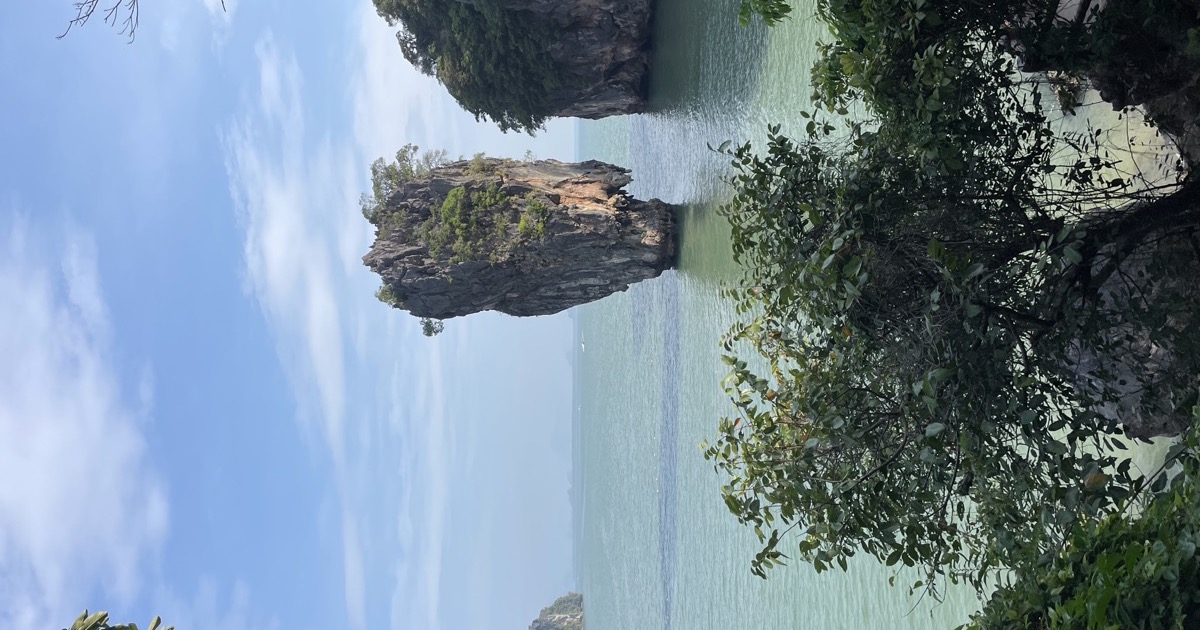
Krabi and its province: Ao Nang as a base, Railay accessible only by boat, the Tiger Cave Temple at dawn. These are the most spectacular landscapes in the country.
Next, the gulf
Koh Samui, then Koh Tao, which remains my favorite island and one of the cheapest places in the world to get your first-level diving certification.
But the order depends on the month
This is the only point where the itinerary isn’t entirely up to you. The two coasts have opposite seasons: the Andaman Sea from November to April, and the Gulf from January to September. In November, the Gulf receives the most rainfall in the country, while the Andaman Sea, three hundred kilometers away, is dry.
Check the season before finalizing your itinerary: when to go and the rainy season.
What I Would Do Differently
Less time in Bangkok at the beginning, more at the end. Three days upon arrival are more than enough, and the city is more enjoyable once you’ve left the rest behind.
More time in Isan—not less. This is the leg of the trip we remember, and ten days there go by quickly.
One more domestic flight. Every overnight trip you skip is a day gained—for the price of a meal at a restaurant in France.
In summary
A month in Thailand is pointless if it’s just a stretched-out version of a two- week itinerary. What it does allow for is a trip to Isan—ten days in the country’s most populous and least-visited region—a detour through Laos via the Mekong River, and a return to the islands via a domestic flight costing €30 to €60, which saves two days of driving. The order in which you visit the two coasts isn’t a matter of personal preference but depends on the calendar: the Andaman Sea from November to April, the Gulf of Thailand from January to September. And save Bangkok for last.